
Conversations with journalists, peacebuilders, filmmakers, and scholars on the frontlines of both peace and conflict.


In the news media, war gets more headlines than peace, conflict more airtime than reconciliation. On The Making Peace Visible Podcast, we speak with journalists and peacebuilders who help us understand the human side of conflicts and peace efforts around the world. From tech founders using AI to predict and prevent crises, to filmmakers documenting protest movements around the globe, to scholars decoding the psychology of polarization, these are the storytellers who are changing the narrative.
Political polarization in the U.S. can feel like a lost cause. Trying to have productive conversations with people you disagree with over politics can seem pointless. News media and social media often reduce “the other side” to its most extreme forms. This creates a negative feedback loop, weakening our ability to function as a democracy.
But research strongly suggests that Americans — on both the Left and the Right — often misperceive how hostile, uniform, or different their opponents really are.
In our seven part Beyond Polarization series, we're talking to experts from across the political spectrum — in journalism, education, government, and more —, about what it’s costing Americans, and what we can actually do about it. The point isn’t to agree (not gonna happen), or even to move toward the center. As our guest for this first episode Julia Minson puts it, we need to learn to “disagree better.”
Julia Minson is a social psychologist and professor of public policy at the Harvard Kennedy School of Government. She’s the author of How to Disagree Better published in March 2026, and the founder of the behavioral science consulting firm Disagreeing Better, offering speaking and training on effective management of conflict. In this episode she shares some of her research findings about what we get wrong about each other, and what interventions have worked to correct misperceptions. Plus, she shares a proven formula you can use to have a meaningful conversation in conflict situations.
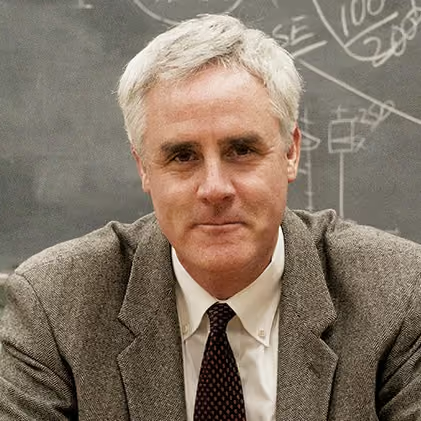
William Ury is one of the world’s most influential peacebuilders and experts on negotiation. He advised Colombian president Juan Manuel Santos in the lead up to that country's historic 2016 peace agreement with the FARC, and played a key role in de-escalating nuclear tensions between the U.S. and North Korea in 2017. Getting to Yes, which Ury co-wrote with Roger Fisher back in 1981, is the world’s best selling book on negotiation. Ury co-founded the Program on Negotiation at Harvard, as well as the Abraham Path Initiative, an NGO that builds walking trails connecting communities in the Middle East.
His new book is called Possible: How we Survive - and Thrive - in an Age of Conflict. It’s filled with incredible stories from Bill’s career. In this episode, Bill talks about how lessons from the failures and success of the past – in places like Northern Ireland, Colombia, and the Middle East – can be instructive when dealing with the conflicts of today. He shares exciting ideas about how journalists can tell stories about peace. What’s more, his insights on managing conflict can be applied anywhere from the UN to the boardroom to your own family.
William Ury’s ideas aren’t easy to implement – in fact they’re incredibly challenging. Ury says conflicts don’t end, but they can be transformed, from fighting with weapons to hashing differences out in a democratic process. And if Northern Ireland, South Africa, and Colombia – places where people said violent conflict would go on forever – could transform their conflicts, then there’s hope for the seemingly “impossible” conflicts of today.
Our guest Megan K. Stack began a recent op-ed in the New York Times describing a contentious debate about anti-immigration riots in the Northern Ireland Assembly, “each speaker straining to upstage the last in outrage and fervor.” But unlike many opinion writers, she doesn’t go on to expound on the importance of civility in public discourse. Instead, she marvels that this debate is happening at all – amidst the children of Protestant paramilitaries and I.R.A. bombers, people who grew up in communities that battled each other bitterly for about 30 years – but now share power under a peace agreement that’s endured for almost as long.
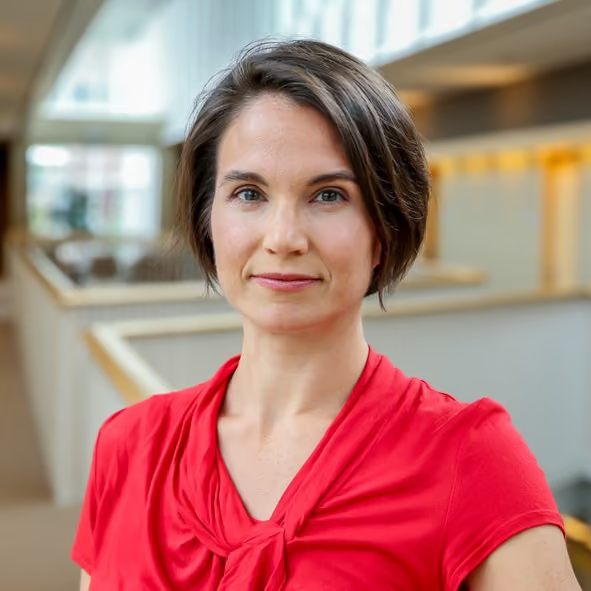
Megan K. Stack is a journalist and contributing opinion writer for the New York Times, who’s reported from several conflict zones including Israel/Palestine and Northern Ireland. In this episode, she analyzes key moments and actors in the negotiations that ended the “Troubles,” the 3 decades of violence between Irish Catholics and Protestants in Northern Ireland. And she makes the case for applying lessons from that peace process to Israel’s negotiations with Gaza – including on the sensitive issue of disarmament.
Read Megan Stack’s essay Northern Ireland, Gaza and the Road to Peace.
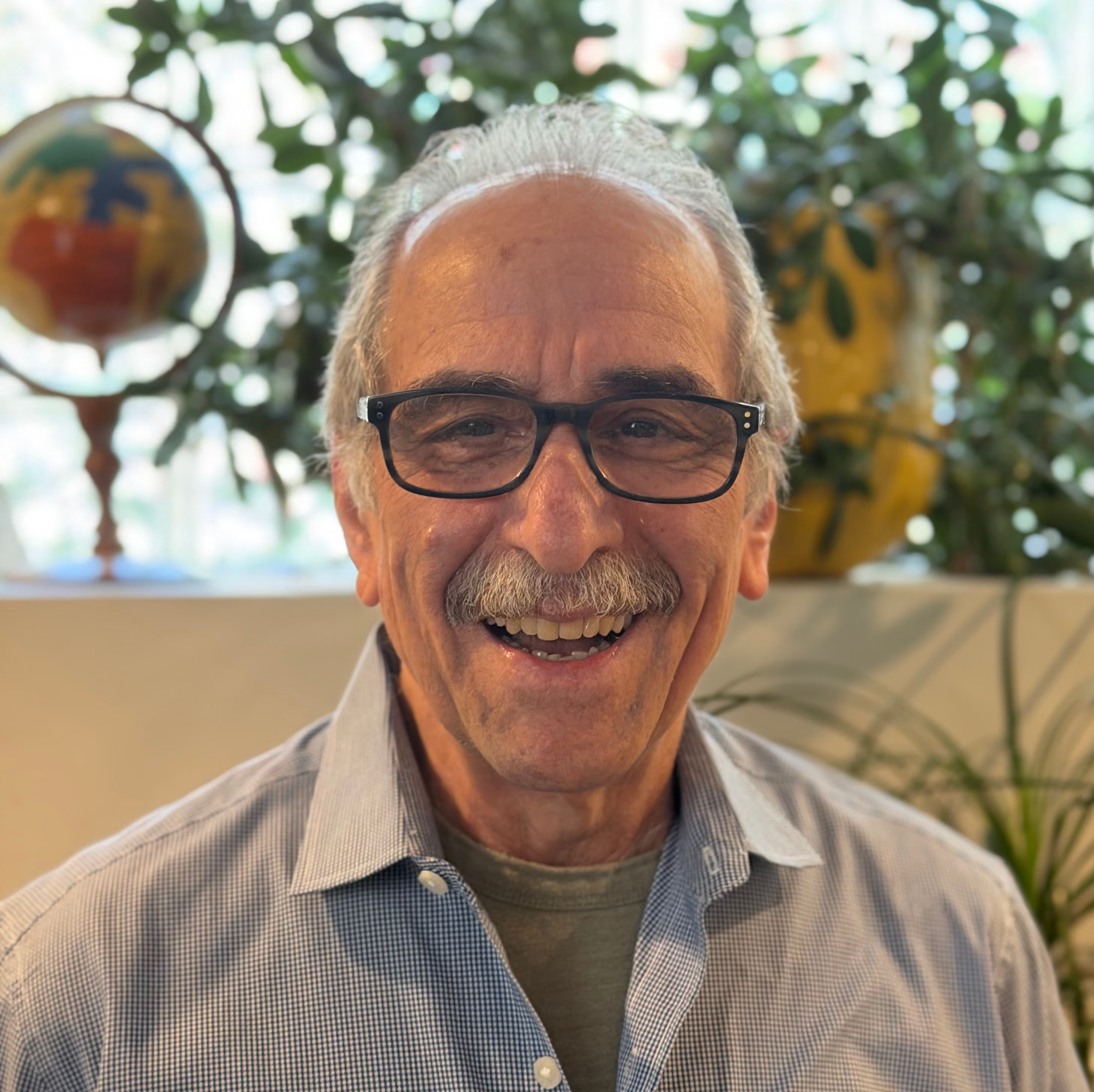
Jamil Simon is an award-winning documentary filmmaker, communications expert and a lifelong peace activist. He has made documentary films about sustainable development, education, nutrition, and child health. In partnership with multilateral organizations like USAID and the World Bank, Jamil has worked in Africa, Europe, Asia, and Latin America promoting social and environmental reform through documentary film and public awareness projects. In 2017, he founded Making Peace Visible (originally called War Stories Peace Stories) and was awarded the Luxembourg Peace Prize in 2019.


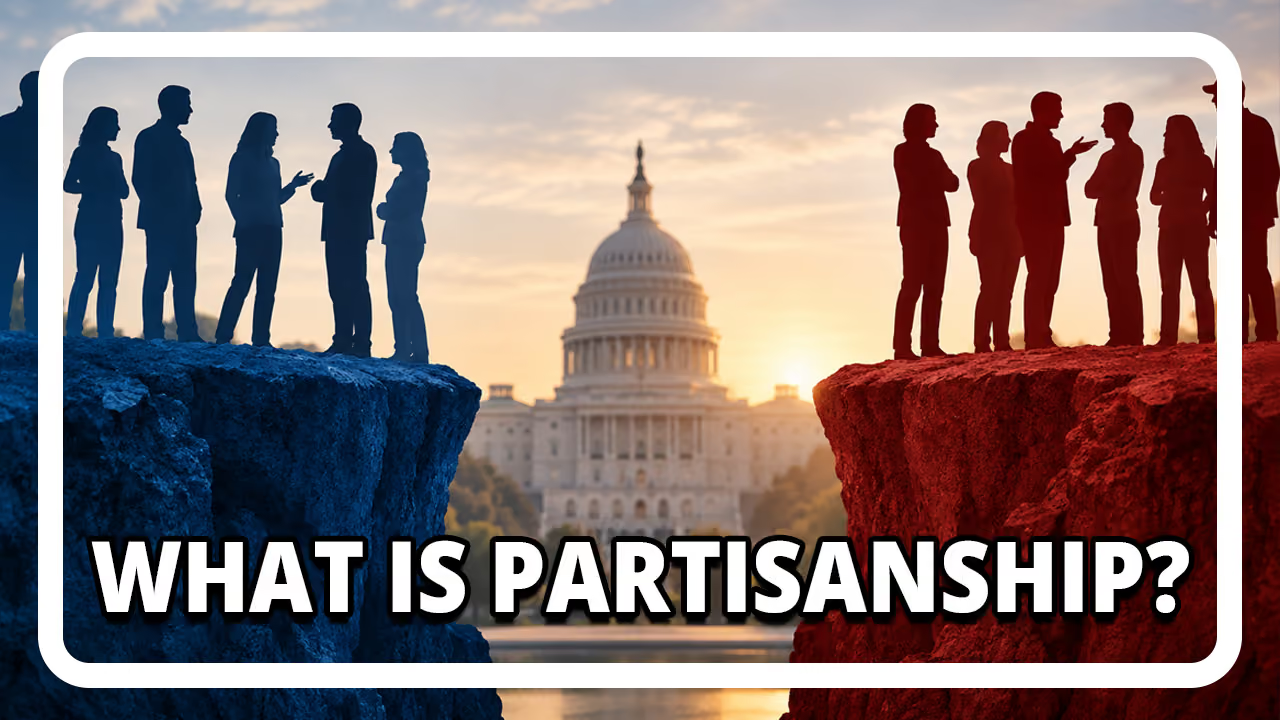
What is partisanship, and why does it divide us? Learn the psychology, consequences, and ways Americans can bridge the partisan divide.

Making Peace Visible Founder Jamil Simon shares why reframing conversations on peace is essential to reducing global conflict.
Engaging in civil discourse. Inspiring civic engagement. Exploring the future of our democracy.
Join our community and never miss your favorite episodes from the Democracy Group.
Subscribe to our Newsletter

.avif)
.avif)





.avif)

