


Every society must answer the same fundamental question: Who holds political power, and how should that power be exercised? The answer gives rise to different forms of government—from democracies and republics to monarchies, oligarchies, theocracies, military juntas, authoritarian regimes, and totalitarian states. While these labels describe how governments are organized, they also reveal how much freedom citizens enjoy, how leaders are chosen, and what limits exist on those in power.
In today's world, however, the most important distinction is often not between monarchy and republic or democracy and dictatorship. Instead, political scientists increasingly ask a different question: How democratic or authoritarian is a country's political system? Rather than fitting neatly into one category, many governments exist somewhere along a spectrum, with democratic institutions strengthening or weakening over time.
In this article, you'll explore the major types of government, with a particular focus on democracy, anocracy, and authoritarianism. Drawing on insights from political scientists, historians, democracy advocates, and public officials featured across The Democracy Group podcast network, you'll learn how different systems of government function, why democracies can erode, how authoritarian leaders consolidate power, and what warning signs citizens should recognize to better understand the health of their own democracy.
Subscribe to receive a biweekly collection of the hottest podcast episodes from the network, upcoming special events, expert features, and news from your favorite shows.
Subscribe to our NewsletterThe main types of government can be grouped in several ways. The most common approach is to categorize them by who holds power, how leaders are chosen, and how much freedom citizens have. Here's a clear overview:
One important point is that these categories are not mutually exclusive. A single country can fit into several at once. For example, the United States is both a constitutional republic and a representative democracy.
Much of today's political discourse centers on one question: How democratic or authoritarian is a country's political system?
That's because many governments fall somewhere between the two extremes. Rather than being clearly democratic or dictatorial, countries often have competitive elections with unfair advantages for incumbents, some press freedom alongside increasing censorship, or independent courts that face growing political pressure.
This makes it useful to think of democracy and authoritarianism as opposite ends of a spectrum rather than separate boxes. It reflects the reality that countries can become more or less democratic over time.
A spectrum might look like this:
Liberal Democracy
↓
Electoral Democracy
↓
Hybrid Regime / Anocracy
↓
Competitive Authoritarianism
↓
Closed Authoritarianism
↓
Totalitarianism
Steven Levitsky, an American political scientist and professor of government at Harvard University, explains this spectrum using the example of the United States.
Steven Levitsky:
"We definitely should see democracy and authoritarianism as a continuum rather than a binary, and that's always been the case. The United States, even by standard political science definitions of democracy—which mean free elections, universal adult suffrage, and broad protection of civil liberties—wasn't a full democracy until 1965. By that definition, we were a hybrid regime for most of our history.
Especially since the end of the Cold War, many countries around the world—the former Soviet Union, countries in Africa, and some in Latin America—have been hybrids. They hold elections, but those elections may not be entirely free, or the playing field may be tilted. Incumbents can bully the media, buy off parts of the private sector, and intimidate the opposition. So while elections exist, and may even be competitive, they are not truly fair.
These hybrid regimes contain real elements of democracy alongside elements of authoritarianism. They've always existed, but they've become especially common throughout much of the world since the end of the Cold War."
To better understand this spectrum, let's take a closer look at democracy, anocracy, and authoritarianism.
Listen to the full episode on The Context: Institutional Reform Won’t Save Democracy in 2024. What Will?
Democracy is a broad term that refers to a system of government in which supreme power is vested in the people and exercised by them directly or indirectly. It generally takes one of two forms: direct democracy and representative (indirect) democracy.
A direct democracy is a system of government in which citizens make policy decisions and pass laws directly rather than through elected representatives, typically using majority rule. It empowers voters to directly influence government by bypassing legislative bodies through mechanisms such as referendums, initiatives, and recalls. These mechanisms most often operate at the state or local level.
A well-known historical example is Ancient Athens. While direct democracy is rare at the national level, many countries use direct democratic mechanisms for specific issues. Switzerland is the most prominent modern example of incorporating direct democracy at the national level.
An indirect democracy, also known as a representative democracy, is a system in which citizens elect representatives to make laws and public policy on their behalf. Representative democracies can be further categorized as either liberal or illiberal.
A liberal democracy is a representative democracy characterized by the rule of law, protections for individual rights and civil liberties, and constitutional limits on the power of elected officials.
An illiberal democracy is a representative democracy in which elected leaders face weak or few constitutional constraints, allowing them to govern with fewer protections for individual rights and democratic institutions.
Representative democracies are overwhelmingly more common than direct democracies. In fact, every modern country commonly classified as a democracy relies primarily on representative democracy at the national level.
To better understand democracy, let's hear from political commentator Andrew Sullivan and political scientist Lee Drutman about the challenge of maintaining democracy.
Andrew Sullivan:
"Democracy itself, I think, is a double-edged sword. Pure democracy, Plato would tell you—and so would Aristotle—is extremely unstable, and the Founders certainly believed that as well. They were very cognizant of what happened to the Roman Republic, and it's always in danger of tipping over into something uglier."
Listen to the full episode on Democracy Works: Andrew Sullivan on democracy's double-edged sword
Lee Drutman:
"Liberalism is basically the idea that every individual should have fundamental rights, including, when it's paired with democracy, the right to participate in democracy. Liberalism and democracy support each other because it's very hard to sustain a democracy without recognizing the dignity and value of every individual as someone who can participate equally in the democratic process. But it's equally hard to maintain liberalism without democracy to ensure that everyone has equal participation in political power.
In many ways, these values can also be in tension with one another. Liberalism tends to emphasize individual rights, while democracy emphasizes collective responsibilities. Maintaining the balance between individual liberty and collective obligations can be challenging because those two don't always align. The danger comes when one overwhelms the other.
Democracy can quickly become illiberal. Is Hungary a democracy? It has elections, but there's also a crackdown on political opposition. At some point, it becomes authoritarianism. That's what I worry about when too much power is concentrated in particular leaders.
On the other hand, liberalism can also undermine democracy. If there's too much emphasis on individual rights and not enough on collective responsibility, negotiation, and compromise, it becomes difficult to govern effectively. Inevitably, that creates a backlash and a demand for someone to take greater authority."
Listen to the full episode on Politics in Question: What makes American democracy work?
Chris Beem, Managing Director of the McCourtney Institute for Democracy, explains that part of the reason democracy is so difficult to maintain is that it requires us to have conversations with people we disagree with and then create rules based on those conversations. Andrew Sullivan and Lee Drutman expand on this idea by discussing the virtues of conversation and constructive conflict that democracy requires.
Chris Beem:
"If you want your democracy to be sustainable, this is what you're going to have to commit to: accepting the fact that people aren't always going to agree with you, that you're going to hear things you don't like, and that you're going to express your point of view without getting personal or becoming enraged and emotional. You also have to begin with the assumption that the person you're arguing with—the person you disagree with—loves their country, loves their kids, and is basically a good person."
Andrew Sullivan:
"A liberal democracy requires certain virtues. It requires the ability to have a deliberative conversation, to use reason as well as emotion—but reason is the core of it. It requires openness to other ideas and tolerance for radically different worldviews existing within the same culture. And that's hard. It's really, really hard. It's harder than we think.
It's difficult for human beings, for example, to presume someone's innocence before they're proven guilty, especially when they appear extremely guilty and the evidence seems overwhelming. In that sense, liberal democracy runs deeply counter to human nature.
Illiberal democracy, by contrast, is the empowerment of the majority over the minority, usually through a single leader or a single party that takes control of a society and its government."
Listen to the full episode on Democracy Works: Andrew Sullivan on democracy's double-edged sword
Lee Drutman:
"The fundamental premise is that democracy is fundamentally about conflict. Democracy is about elections, and elections are about conflict—because what else would elections be about? If everyone running for office said, 'It doesn't matter who you vote for because we all agree,' then that wouldn't really be democracy.
Candidates have to disagree. They have to structure conflicts so that elections can help decide among competing visions.
If you accept that democracy is fundamentally about conflict, then there are two important questions. First, who defines those conflicts? One tradition in American political thought argues that political parties should define and structure them. Another argues that individual leaders should rise above partisan politics and shape those conflicts themselves.
The second question is how elections resolve those conflicts. One view is that elections provide mandates and directly settle those disagreements. Another is that elections resolve conflicts indirectly by selecting representatives who then negotiate with one another, balancing the values and interests that the public elected them to represent."
Listen to the full episode on Politics in Question: What makes American democracy work?
Andrew Sullivan:
"The practice of liberal democracy is the practice of exchanging views, perhaps being corrected, correcting someone else, or even learning something from the conversation. But you have to participate in that spirit, because the spirit of democracy matters.
Take censorship, for example. In this country, we're generally not talking about the government banning books or preventing people from speaking. But we are talking about a growing tendency within civil society—voluntarily, without anyone breaking the law—to restrict certain viewpoints, stigmatize them excessively, or declare them off-limits for discussion.
Sometimes the people expressing those ideas are portrayed as morally suspect rather than simply mistaken or misguided. That also undermines the liberal virtues that are necessary to sustain democratic institutions. You need a liberal culture for a liberal democracy to function.
The other essential virtue is moderation. People don't fully appreciate the role moderation played in the emergence of liberal democracy. Liberal democracy developed as a response to centuries of religious warfare, when groups of people became so consumed by their own beliefs that they couldn't tolerate living alongside those who disagreed with them. The result was hundreds of years of devastating conflict.
Liberal democracy began to emerge when Western Europe collectively decided, 'You know what? This isn't worth it anymore. Let's live and let live.'"
Listen to the full episode on Democracy Works: Andrew Sullivan on democracy's double-edged sword
As you've learned, maintaining a democracy is difficult because it requires people to engage in behaviors that don't always come naturally—accepting opposing viewpoints, tolerating disagreement, and resolving conflicts peacefully. When those democratic norms begin to weaken, countries often enter a middle stage known as anocracy.
Barbara F. Walter, Professor of International Affairs at the School of Global Policy and Strategy at UC San Diego and one of the world's leading experts on civil wars, violent extremism, and domestic terrorism, explains the concept of anocracy.
Barbara Walter:
"Anocracy is just a fancy political science term for a partial democracy. It's a government that's neither fully democratic nor fully autocratic. It's something in between.
Think about a country where elections are held, and citizens are enthusiastic about voting. Hungary is a good example. But once someone is elected, there are very few constraints on what that leader can do. Viktor Orbán essentially governs however he wants. The opposition tries to remove him but is never successful, in part because he controls the state media and has structured the system so that no other party can compete on equal footing."
Listen to the full episode on Democracy Works: Between democracy and autocracy
Anocracy often emerges during periods of political transition, instability, or democratic backsliding. Rather than being a permanent form of government, it is frequently a transitional stage that countries pass through as they become either more democratic or more authoritarian.
Common characteristics of anocracies include:
Freedom in the World, the annual survey published by the U.S.-based nonprofit organization Freedom House, measures civil liberties and political rights around the world. The report describes how democracies can gradually slide toward authoritarianism:
"Democratic institutions such as free and fair elections, independent legislatures and courts, and strong anticorruption agencies serve to facilitate public participation and representation, protect individual rights, and place checks on those in power. The erosion of these features of democracy... can effectively exacerbate authoritarian rule..."
Political scientist Kevin Smith, a professor at the University of Nebraska, explains that weakening the institutions that make disagreement possible can accelerate that democratic decline.
Kevin Smith:
"In a fundamental way, what we're talking about is the same issue and dilemma that James Madison was wrestling with in Federalist No. 10. How do you create a system that guarantees individual freedom without allowing people to use that freedom to deprive others of theirs?
Madison considered the alternatives. One possibility was giving everyone the same preferences, but that's simply never going to happen. So the real question becomes: How do you build a system where people can have deep disagreements about politics and governance—sometimes disagreements that seem impossible to reconcile—and still reach compromise within a large, diverse republic?
Madison had a remarkably good answer to that question. As I said, those institutions are still standing and still functioning. But if we continue to erode the norms that support those institutions, eventually the institutions themselves will fall."
Listen to the full episode on Outrage Overload: Outrage 31 – In a Democracy You Get Exactly the Government You Deserve
Research has consistently found that anocracies tend to be less politically stable than either well-established democracies or entrenched authoritarian regimes. This is often because:
This does not mean every anocracy becomes unstable. However, compared with established democracies and entrenched authoritarian regimes, anocracies generally face a greater risk of political instability and democratic breakdown.
Authoritarianism is a broad term that refers to a system of government in which political power is concentrated in the hands of one leader or a small group, with limited political competition and few constraints on the government's authority. Citizens typically have restricted civil liberties, opposition parties face significant barriers, and elections—if they exist—are often neither free nor fully competitive.
Political scientists commonly classify authoritarian governments in two ways: by how open the political system is and by who holds power.
Competitive authoritarianism is a system in which democratic institutions such as elections, legislatures, and courts continue to exist, but those in power manipulate them to maintain control. Opposition parties may participate in elections, but they face significant disadvantages through media bias, harassment, restrictions on campaigning, or unequal enforcement of the law. While citizens retain some political freedoms, the political playing field is heavily tilted in favor of the ruling party.
Closed authoritarianism is a system in which meaningful political competition is eliminated altogether. Elections are either absent or purely symbolic, opposition parties are banned or rendered ineffective, and the government exercises extensive control over political life. Citizens have little realistic opportunity to replace their leaders through peaceful democratic means.
Totalitarianism is the most extreme form of authoritarianism. In addition to suppressing political opposition, totalitarian governments seek to control nearly every aspect of society by shaping citizens' beliefs, values, and daily lives through a single official ideology, extensive censorship, propaganda, state surveillance, and control over education, media, religion, and often the economy. Historical examples include Nazi Germany under Adolf Hitler and the Soviet Union under Joseph Stalin.
Authoritarian governments can also be classified according to who exercises political power.
Many authoritarian governments combine several of these characteristics. For example, a country may be both a one-party state and highly personalist, or both an absolute monarchy and a theocracy.
An autocracy is a system of government in which political power is concentrated in the hands of a single individual who exercises authority with few or no meaningful legal constraints. Unlike broader forms of authoritarianism, which may be governed by a ruling party, military council, or elite group, an autocracy centers power in one leader whose decisions largely determine the direction of the state.
Autocrats may inherit power, seize it through force, or come to office through elections before dismantling the democratic checks on their authority. While some autocracies maintain constitutions, legislatures, or elections, these institutions generally serve to reinforce the ruler's power rather than meaningfully constrain it.
Unlike democracies, which today are overwhelmingly representative, authoritarian regimes exist in a wide variety of institutional forms. Some maintain elections and limited political opposition to create the appearance of democratic legitimacy, while others eliminate political competition almost entirely. As a result, political scientists increasingly view authoritarianism as existing on a spectrum, with competitive authoritarianism closest to democracy and closed authoritarianism and totalitarianism representing increasingly concentrated and unrestricted forms of political control.
To better understand how authoritarian governments differ from democracies, let's hear from former Georgia State Representative Stacey Abrams.
Stacey Abrams:
"Democracy is a construct. We're asking people to suspend their own arrogance and their desire to win. We're saying, 'I want you to share your power with someone you don't know and might disagree with.' The idea is that if we share power, contribute our resources, and negotiate through elections, we should all come out better on the other side.
Autocracy, by contrast, says, 'You don't get to have a say. We'll decide what you get, and we'll decide what the end goal is.' An autocracy centers on a single leader who accumulates and consolidates power. Authoritarianism is broader. Power still rests with a small group, but they maintain control by suppressing individual rights and freedoms while eliminating accountability."
Listen to the full episode on Politics in Question: How Do We Stop the Rise of Autocracy? Feat. Stacey Abrams
The slide from democracy into authoritarianism rarely happens overnight. Political scientists have identified a recurring set of tactics that authoritarian leaders use to consolidate power.
Yelena V. Litvinov, cofounder of STROIKA, Inc., an organization that connects and supports frontline anti-authoritarian activists around the world, describes several elements of this authoritarian playbook.
Yelena V. Litvinov:
"There are certain moves that we see time and time again. They vary from one context to another because the playbook is designed to be transferable and adaptable to whatever helps consolidate power in a particular country.
The first tactic is divide and conquer. You identify a group that's easy to scapegoat and easy to target. In the United States, that has included immigrant communities, racial minorities, and transgender people. The point is to isolate an easy target.
The second tactic is consolidating control over the media.
Third, you take control of institutions that could check your power by discrediting or capturing the judiciary, the legislature, and other civic institutions. The goal is to eliminate as many constraints on your authority as possible while gaining access to state resources.
Ultimately, the authoritarian playbook is also about corruption. It's about using public office to enrich yourself and direct public resources toward your own interests."
Listen to the full episode on Future Hindsight: The Authoritarian Playbook: Yelena V. Litvinov & Tatyana Margolin
These observations are not merely theoretical. Independent organizations that monitor democracy around the world have documented many of these same patterns in practice. Freedom House has documented many of these same patterns in its Freedom in the World reports:
"In settings where institutional guardrails have already been weakened or eliminated, there is nothing to prevent autocrats from using the courts as tools of repression. In the worst cases, autocrats have used the military and security services to violently crush citizens' attempts to exercise their rights."
"During the last two decades, the rulers of established autocracies have not simply dismantled institutional checks on their rule. They have taken the additional step of converting the structures and resources of the state into weapons with which to attack their opponents and critics."
Litvinov identifies another critical element of the authoritarian playbook: fear and isolation.
Yelena V. Litvinov:
"One thing I'd add to the playbook is fear and isolation. Those are absolutely essential. Every authoritarian depends on a fear-based narrative: convincing people that someone else's success somehow threatens their own.
That strategy only works when people are isolated. Technology and today's economic realities have made isolation much easier. We don't have to leave the house anymore. We used to go to the grocery store or interact with our neighbors. Now apps make it almost frictionless to avoid interacting with other people altogether.
That's dangerous because technology can reinforce authoritarian isolation. But technology can also help break it down. We can connect with people we've never met, see how they live through TikTok, YouTube, and other platforms, and realize that the people we've been told are our enemies often have the same hopes, dreams, struggles, and everyday lives that we do. We begin to recognize that, in many ways, we all want the same things."
Listen to the full episode on Future Hindsight: The Authoritarian Playbook: Yelena V. Litvinov & Tatyana Margolin
What does all of this mean for the United States? Are there aspects of our system of government that could make democratic backsliding more likely?
Let's hear again from Steven Levitsky, who argues that certain features of the American political system may create opportunities for an authoritarian movement to gain and retain power.
Steven Levitsky:
"A minority party is able to systematically thwart—and sometimes govern over—electoral majorities. In our view, that not only shouldn't happen, but it doesn't happen in most other established democracies.
The United States is an outlier. It's the only presidential democracy with an Electoral College; every other presidential democracy elects its president directly. It has one of the most malapportioned senates in the world—only Argentina and Brazil are slightly worse. We're the only established democracy that routinely uses a filibuster to create what is essentially a supermajority requirement for ordinary legislation.
As you noted, we also have the hardest constitution in the democratic world to amend. And we're the only established democracy with neither term limits nor a mandatory retirement age for Supreme Court justices, allowing them to rule against elected majorities for generations after their appointment.
We therefore have an unusually counter-majoritarian system. I believe that is inherently less democratic, and the danger is that it can protect and empower an authoritarian political party."
Listen to the full episode on The Context: Institutional Reform Won’t Save Democracy in 2024. What Will?
Some scholars and democracy advocates argue that they have seen early warning signs of democratic backsliding in recent actions taken by the president. Amanda Carpenter, a writer and editor at Protect Democracy, reflects on several of the developments she believes are cause for concern.
Amanda Carpenter:
"Those pardons aren't just about letting January 6th rioters off the hook. They're creating a license for political violence by signaling to future bad actors that if they act on the president's behalf, they'll likely receive sympathy—or even outright approval.
During his first term, he pioneered what we call 'henchman pardons.' Historically, pardons have been a tool of mercy used to advance the public interest, not to provide personal or political protection.
It's an extraordinarily broad presidential power, and he's using it in what I believe is one of the most dangerous ways possible.
Couple that with the weaponization of the Department of Justice and the broader agenda of political retribution, and these pieces begin to reinforce one another. The purges we're seeing aren't simply about removing so-called 'deep state' officials who won't go along with the administration's agenda. They're also about creating vacancies for loyalists. It's a one-two punch.
The real concern is what happens when government officials begin believing they're accountable to the president rather than to the Constitution or the law. If they violate the law, they may expect the president to use the pardon power as a get-out-of-jail-free card."
"When it comes to actions that could fundamentally threaten our rights, regulatory retaliation is one of the biggest concerns. If the business community continues to capitulate, that's a serious problem. We saw how quickly that happened with companies like Facebook, with Mark Zuckerberg, and with Jeff Bezos. The speed of that shift surprised many people.
Another concern is the expansion of federal law enforcement authority. For years, we've heard statements encouraging police officers to 'do what you need to do' with the assurance that they'll be protected afterward. We've also seen policy proposals that would indemnify officers who violate immigration law. Those messages effectively become another green light: do what I say, don't worry about the law.
The domestic deployment of the military is another major red line. During the first term, there were open discussions about using the Insurrection Act to respond to Black Lives Matter protests. Members of the new administration have advocated for an expansive interpretation of the Insurrection Act and broader authority for governors to deploy the National Guard on the president's behalf.
We've spent considerable time researching those issues and educating members of the military about the constitutional concerns involved. Military personnel understand that they swear an oath to uphold the Constitution. They also understand the chain of command, so helping them think through those responsibilities has been an important part of our outreach.
Those are some of the major elements of what we see as the authoritarian playbook, and unfortunately, we've already begun to see parts of it emerge—including the use of the pardon power and the politicization of the Department of Justice."
Listen to the full episode on New Faces of Democracy: Protect Democracy
Yelena V. Litvinov argues that authoritarianism is never just someone else's problem. According to her, the same tactics used against one institution or group are eventually applied to others.
Yelena V. Litvinov:
"We need to understand that everything we're fighting for is potentially at risk. It's in an authoritarian's best interest to keep us isolated, to keep us consumed by our own movements and our own issues, and so overwhelmed by attacks on our own communities that we're constantly putting out fires without realizing everyone else is fighting the same fire.
There's a cliché that says, 'An attack on one of us is an attack on all of us,' but I think that's genuinely true.
Right now, there's a real danger that some groups—whether nonprofits, funders, businesses, or media organizations—will conclude, 'If we just stay away from these controversial issues, we'll stay under the radar and be safe.'
One of the clearest lessons from other authoritarian contexts is that this strategy doesn't work. You won't be safe. Once authoritarian leaders figure out how to dismantle one movement, one organization, one type of company, or one issue area, they're simply testing a playbook. Before long, they'll apply those same tactics to everyone else."
Listen to the full episode on Future Hindsight: The Authoritarian Playbook: Yelena V. Litvinov & Tatyana Margolin
If there's one lesson that emerges from these conversations, it's that no system of government is self-sustaining. Democracies are not guaranteed, authoritarianism rarely arrives all at once, and the line between the two is often crossed gradually rather than dramatically. The health of a country's political system depends not only on its constitution and institutions, but also on the willingness of its citizens to protect the norms that allow those institutions to function.
For most of us, that doesn't mean becoming constitutional scholars or political activists. It means paying attention. Are elections still free and fair? Can political opponents compete on equal footing? Do courts remain independent? Is the press able to criticize those in power without intimidation? Are civil liberties being protected equally? Are leaders strengthening the institutions that limit their own authority—or weakening them? These are the kinds of questions political scientists ask when evaluating where a country falls on the democratic-to-authoritarian spectrum, and they're questions every citizen can learn to ask as well.
The experts featured throughout The Democracy Group remind us that democracies survive because ordinary people continue practicing the habits that make self-government possible: listening to those they disagree with, participating in elections, defending the rights of others, supporting independent institutions, and resisting the temptation to trade liberty for short-term political victories. Democracies don't endure because they're easy. They endure because generation after generation chooses to preserve them.
Understanding the different types of government is more than an academic exercise. It gives us a framework for recognizing how political systems evolve, identifying warning signs before they become crises, and participating more thoughtfully in the future of our own democracy.
Democracy is a broad term that refers to a system of government in which supreme power is vested in the people and exercised by them directly or indirectly. It generally takes one of two forms: direct democracy and representative (indirect) democracy.
Anocracy is a political system that falls between democracy and autocracy—often described as a partial democracy. An anocracy may retain democratic institutions such as elections, opposition parties, constitutions, and legal protections for free expression, while lacking the strong checks and norms needed to ensure that those institutions function fairly and independently. Political scientist Barbara F. Walter explains that in an anocracy, citizens may vote and participate in politics, yet elected leaders face relatively few effective constraints on their power. Such systems can emerge during periods of political transition or democratic backsliding, as elections become less competitive, courts and legislatures lose independence, opposition groups face disadvantages, and executive authority expands. This weakening of democratic institutions can reduce governments' ability to resolve political conflicts peacefully and can increase the risk of instability and democratic breakdown.
Authoritarianism is a system of government in which political power is concentrated in the hands of one leader or a small group, political competition is limited, and citizens have fewer opportunities to hold leaders accountable than they do in a democracy. Authoritarian systems vary considerably: some maintain elections, legislatures, courts, and opposition parties but manipulate these institutions to favor those already in power, while more closed regimes eliminate meaningful political competition altogether. Political scientists also distinguish authoritarian governments according to who holds power, including personalist dictatorships, military regimes, one-party states, absolute monarchies, and theocracies. Autocracy is a more specific form of authoritarian rule in which power is concentrated primarily in a single individual with few meaningful constraints, while totalitarianism represents an especially extensive form of authoritarian control in which the state seeks to dominate not only politics but also citizens’ beliefs and social life. Because authoritarian regimes differ in how much political competition and institutional independence they permit, authoritarianism is best understood as encompassing a range of systems rather than a single form of government.
Subscribe to receive a biweekly collection of the hottest podcast episodes from the network, upcoming special events, expert features, and news from your favorite shows.
Subscribe to our NewsletterBrandon Stover is the Network Manager for The Democracy Group and a Digital Content Specialist at the McCourtney Institute for Democracy. He leads partnerships and collaborations across the podcast network, oversees educational content strategy, and produces written, audio, and video content while managing the network's digital marketing efforts. Before joining the McCourtney Institute for Democracy, Brandon founded and led a nonprofit organization dedicated to creating free educational content on global issues. He holds a master's degree in Architecture from Washington State University.
What are the main types of government, and where does your country fall on the democracy-to-authoritarian spectrum? Learn the differences between democracy, republics, monarchies, oligarchies, anocracies, authoritarianism, and totalitarianism through expert insights from political scientists, historians, and democracy advocates featured across The Democracy Group podcast network.
Lindsey Cormack discussed civic education, common misconceptions about government and what to expect from her new podcast "Government That Doesn't Suck."

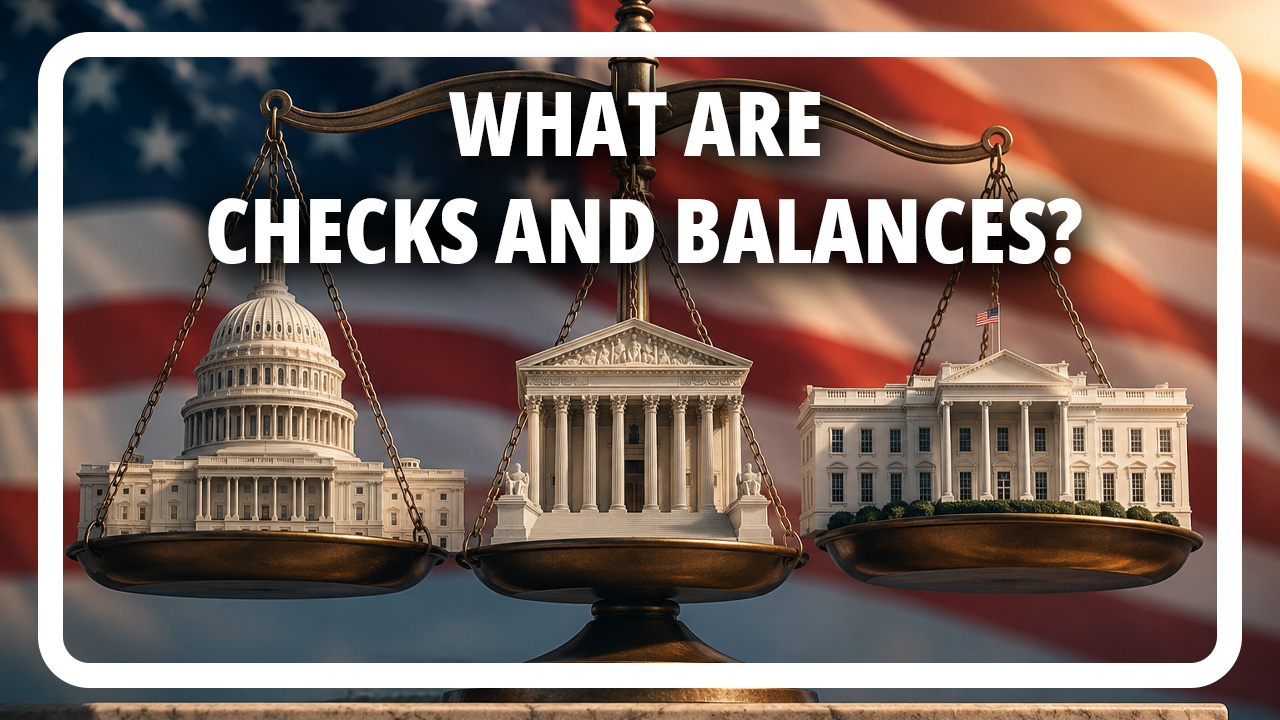
What are checks and balances, and why do they matter? Learn how the legislative, executive, and judicial branches limit one another's power, what happens when those safeguards weaken, and how citizens can help protect American democracy. Featuring insights from experts across The Democracy Group podcast network.
Engaging in civil discourse. Inspiring civic engagement. Exploring the future of our democracy.
Join our community and never miss your favorite episodes from the Democracy Group.
Subscribe to our Newsletter