

Subscribe to receive a biweekly collection of the hottest podcast episodes from the network, upcoming special events, expert features and news from your favorite shows.
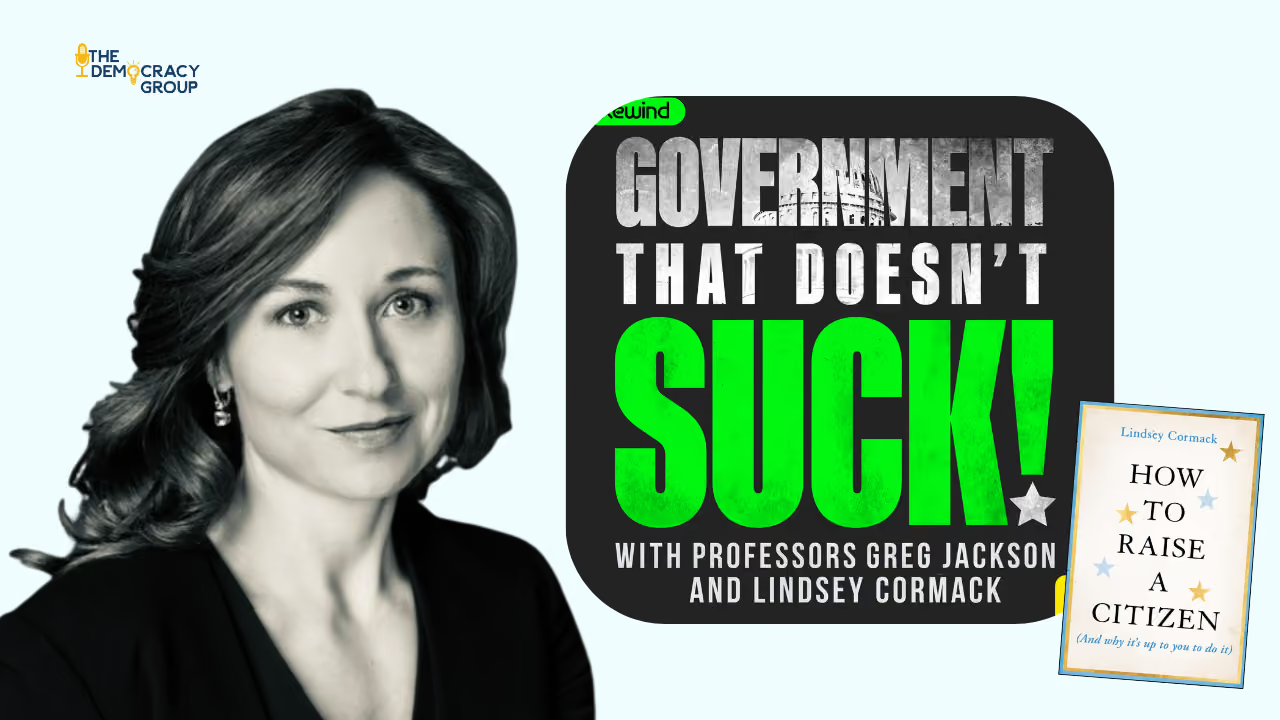
Subscribe to our NewsletterThe Democracy Group is growing! We’re excited to welcome our first podcaster/content creator, Lindsey Cormack — a professor at Stevens Institute of Technology, director of DCinbox, author of “How to Raise a Citizen (And Why it’s Up to You to Do It) and host of “Government That Doesn’t Suck” and “Civic Parenting.”
We caught up with Lindsey about civic education, common misconceptions about government and what to expect from the podcast.
Why do so many Americans feel disconnected from government and politics?
Lindsey: For many students in America from the 1950s onwards, there hasn’t been a robust focus on civics education or knowledge and know-how around government and politics in most K-12 school environments. Most American students usually get one social studies class in middle school and one social studies/government class in high school, and that’s it. The idea that we would be able to understand our government if we get two shots of this in middle school and high school is not reasonable. I don’t blame anyone for not feeling connected to something that they don’t really understand in the first place.
What’s a misconception about government or politics that you’ve noticed?
Lindsey: Oftentimes, people will have a complaint about government, and they’ll see themselves as passengers on this moving ship of democracy or ship of the republic, saying “I don’t really like where we’re going.” When in reality, we are the crew, we get to direct where our politics go. If we wanted to do something different, we have to link arms with others and say “Let’s go in this direction.”
It’s seeing yourself as an agent of this country, not just something that’s acted upon. This is our country. It is mine just as much as it is yours.
What do you want listeners to walk away with after each episode of Government That Doesn’t Suck?
Lindsey: We want listeners to walk away with the idea that there’s a little piece of government that works and maybe something else could work in the future. It’s not cheerleading for the U.S. government because it often gets things wrong, but it’s to say that when we get things right, a lot of us don’t know that.
For instance, when NASA decided that they’re going to go to the moon with the Apollo mission, we didn’t even have pocket calculators or rolling suitcases at the time. And we thought that it was possible to put a man on the moon, and that’s incredible. It’s incredible to think that we could dream this big and then go achieve it. We hope people are going to walk away with the idea that, “I guess we have done this good in the past. I think we could do this well in the future.”
Government That Doesn’t Suck releases new episodes every other Monday.
Subscribe to receive a biweekly collection of the hottest podcast episodes from the network, upcoming special events, expert features and news from your favorite shows.
Subscribe to our NewsletterJessie Nguyen is a Marketing Communication Specialist for The Democracy Group and a Digital News Producer at ABC 8News in Richmond, Va. She produces the network’s bi-weekly newsletter on Substack focusing on civic topics, social issues, political current affairs and podcasting, and oversees social media strategies and execution for The Democracy Group’s social platforms. Jessie holds a bachelor’s degree from Penn State University and a master’s degree from Northwestern University, both in Journalism.
Corinna Bellizzi talks about making the move from business leader to podcaster and how she think about the democracy in the context of social impact

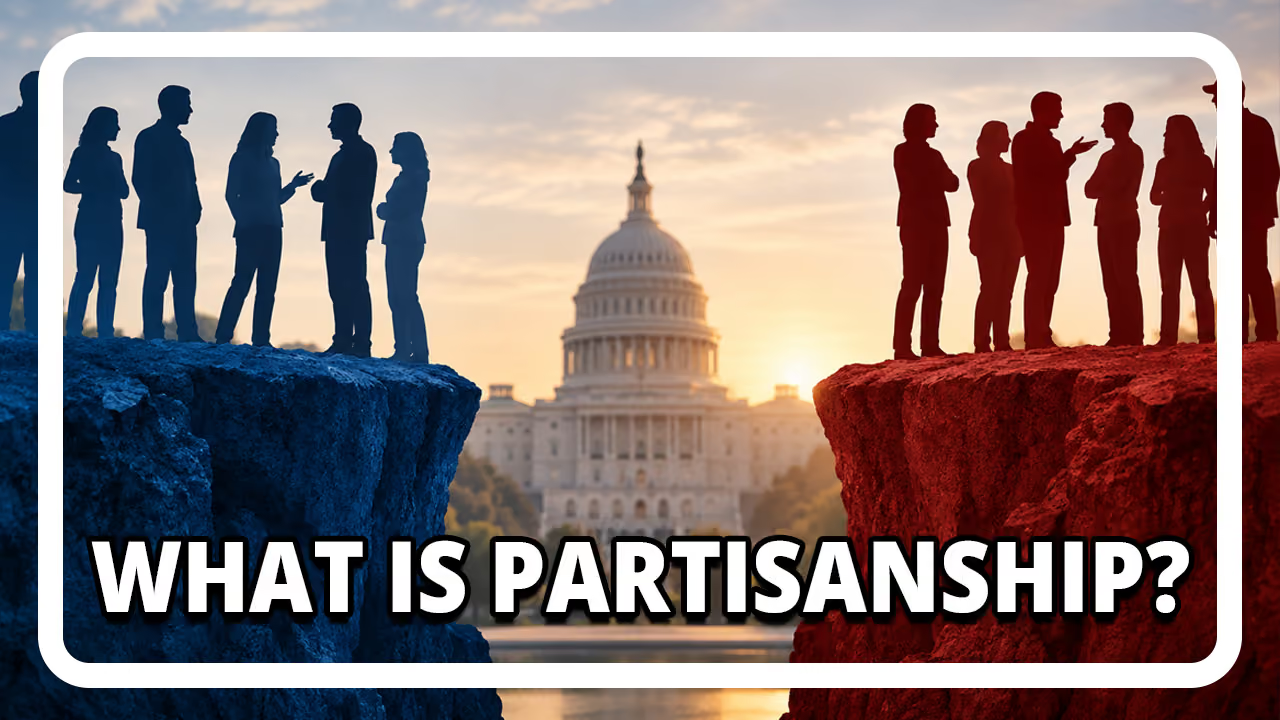
What is partisanship, and why does it divide us? Learn the psychology, consequences, and ways Americans can bridge the partisan divide.

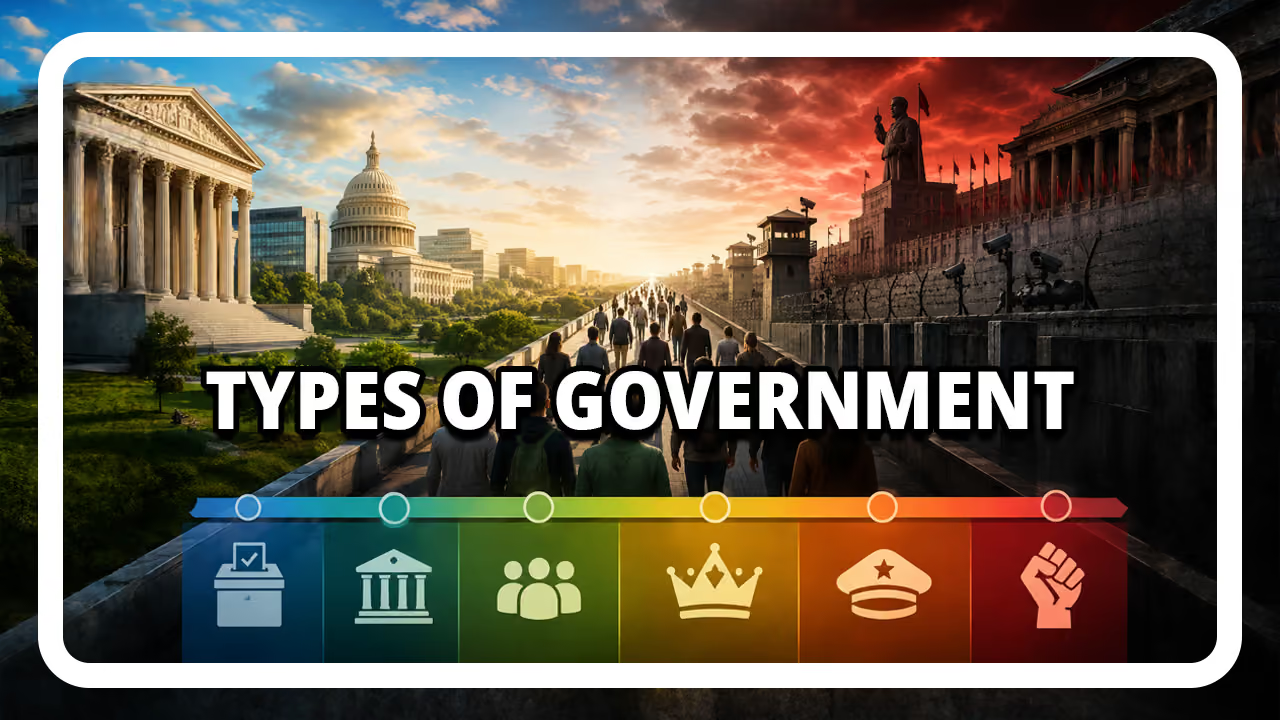
What are the main types of government, and where does your country fall on the democracy-to-authoritarian spectrum? Learn the differences between democracy, republics, monarchies, oligarchies, anocracies, authoritarianism, and totalitarianism through expert insights from political scientists, historians, and democracy advocates featured across The Democracy Group podcast network.
Engaging in civil discourse. Inspiring civic engagement. Exploring the future of our democracy.
Join our community and never miss your favorite episodes from the Democracy Group.
Subscribe to our Newsletter