

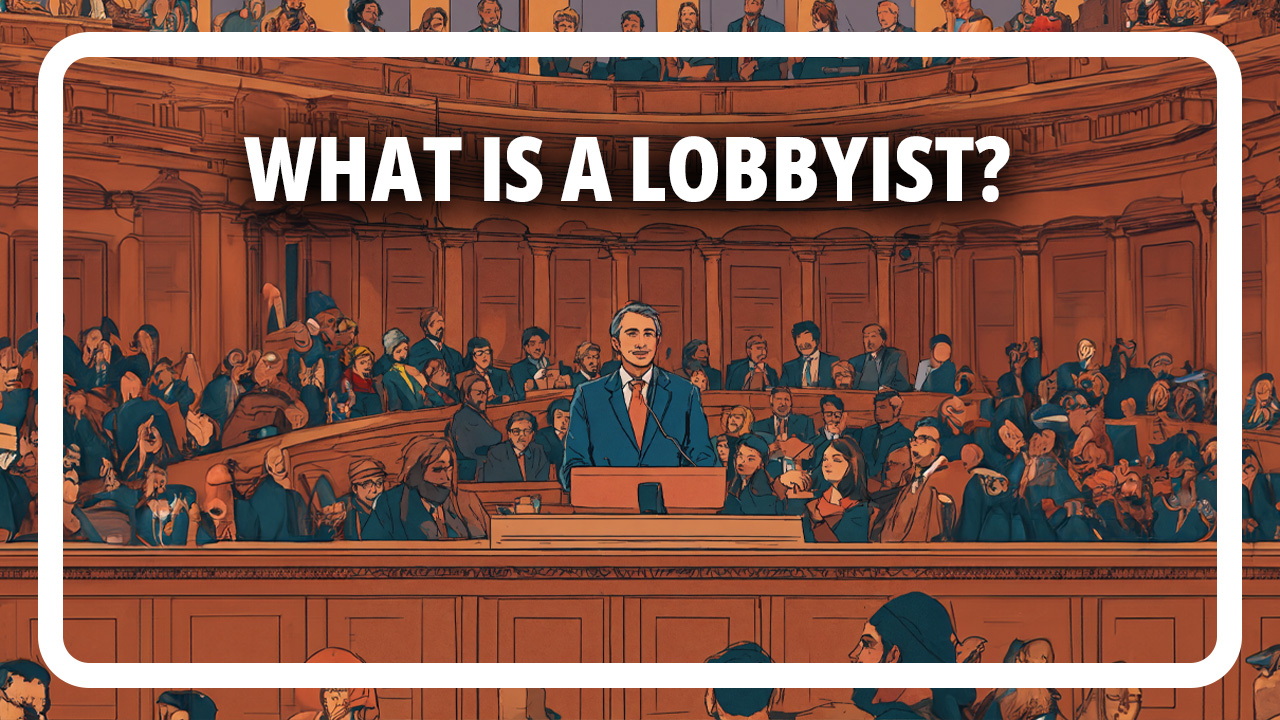
Lobbying is a broad term that refers to efforts by individuals or organized groups to influence public policy by communicating directly with government officials. At its core, lobbying is the act of presenting information, arguments, and policy preferences to lawmakers and their staff in an attempt to shape how laws are written, amended, or enforced.
A lobbyist is anyone who engages in this process by advocating for a specific policy outcome to elected officials or government agencies. Lobbyists may represent corporations, labor unions, nonprofit organizations, advocacy groups, professional associations, or grassroots coalitions—or they may simply be constituents speaking on their own behalf. While professional lobbyists are often registered and paid for their work, lobbying itself is not limited to professionals. Ordinary citizens lobby when they meet with representatives, testify at hearings, or organize collectively to demand change.
Lobbying can take multiple forms.
Because lobbying operates at the intersection of money, power, and political access, it is often one of the most misunderstood—and controversial—features of American democracy. Popular images tend to focus on wealthy interests quietly shaping policy in private rooms. Yet lobbying also includes students meeting with their senators, activists organizing around shared demands, and communities asserting their right to be heard by the people who govern them.
The podcast conversations featured in this article move beyond simple definitions to explore how lobbying actually works in practice—who participates, how influence is exercised, where abuses can occur, and how citizens use the same tools as powerful interests to shape public policy. Together, they reveal lobbying not as a single activity, but as a contested democratic mechanism—one that can either amplify public voices or entrench inequality, depending on how it is structured, regulated, and used.
Related: If you teach political science, our free syllabus guide curates the best democracy podcasts on topics just like this—ready to assign.
Subscribe to receive a biweekly collection of the hottest podcast episodes from the network, upcoming special events, expert features, and news from your favorite shows.
Subscribe to our NewsletterSometimes it’s difficult to understand exactly what lobbying looks like in practice. Jennifer Mandelblatt explains the perception of lobbying that many people hold. Jennifer is a co-founder and executive director of Platform, a political training and lobbying organization focused on ensuring that the voices of young women are heard.
Jennifer Mandelblatt:
“I know that in this era of money and politics, lobbying is such a dirty word. When we talk about lobbying, we often picture old men in back rooms with big cigars and even bigger wallets. But fundamentally, lobbying is about talking about issues and talking to your lawmakers about the specific policy changes you want to see.”
But Jennifer knows firsthand that lobbying can be a powerful mechanism for change for everyday citizens. She offers an in-depth example of how this works during her conversation with host Nathaniel Pearlman.
Jennifer Mandelblatt:
“In the summer of 2014, I was interning on Capitol Hill in the Senate Health, Education, Labor, and Pensions Committee. I was in the labor office. I had studied labor organizing in school and was really taken by what it meant when everyday people—when individuals—came together and claimed power collectively. Collective bargaining and collective action, which we see so strongly in the labor movement, really stuck with me.
While I was still on campus, I also found myself deeply engaged in feminist conversations—talking about the intersection of gender, policy, and human rights. When I interned with the committee, it was for Senator Tom Harkin, who was a champion of the Americans with Disabilities Act and had done such incredible work. I even flew to Iowa just to visit the Harkin Institute when it was still in its early stages. I was—and still am—a big fan of Senator Harkin.
At an intern lunch, we were each allowed to ask one question. This was a time when congressional gridlock felt like the biggest issue. I asked him, ‘What can college students do to improve the workplace for women amid this gridlocked Congress?’
He said that we hadn’t seen young people come together in force since the Vietnam War—but when they did, they had a common goal and a common agenda, and they made their government listen. They said, ‘If you want our votes, you have to protect our rights.’ And he said we needed to see that again.
That really stayed with me. I didn’t know exactly what to do with it, but I had this vague idea of a convention—of opening doors in D.C. and welcoming young people from across the country to come lobby, speak out, and talk about politics. Then I realized I had never planned a convention before.
I had done Model UN in high school, and they let us believe we planned those conferences ourselves. Once we started planning for Platform, I realized just how much support we’d had back then. As the 2016 election approached, I reached out to friends from high school Model UN—women I admired, with different backgrounds, identities, and experiences, who knew how to get work done and were always making change in their communities.
We were all in D.C. one summer, so I invited them to lunch. I was shaking when I said, ‘I just want to catch up—and I might have an idea.’ After about two minutes of small talk, one of them looked at me and said, ‘Okay. What are we here for?’
I explained my idea for a convention ahead of the 2016 election—to bring young women and women-identifying folks together to say, ‘If you want our votes, you have to protect our rights.’ Within 30 seconds, they said, ‘Let’s do this.’ We got to work. That first conference was proof that women get shit done—and it’s why I love working in community with these women. The rest is history.”
Nathaniel Pearlman:
“What did you accomplish at the convention?”
Jennifer Mandelblatt:
“At that first convention, we brought together 35 people from across the country in Washington, D.C. On the first day, we held workshops on LGBTQIA+ justice, racial justice, and equal pay—not just identifying the problems, but digging into the policy conversations surrounding them.
A common barrier people face is asking, ‘What can I actually do? Where do I go? Where do I start?’ These workshops were designed to get over that hump—to say, ‘Here’s the problem as you know it, and here’s what we can do about it.’
After that, we had keynote speakers. Senator Mazie Hirono and Congresswoman Eleanor Holmes Norton came to speak with us and help build power with us. After lunch, we spent the afternoon creating our Declaration of 21st Century Feminism—laying out what it meant for all of us to be there, fighting together. What were we fighting for? What did it mean to show up as feminists and fight for political change?
We worked on that agenda for a long time. I’m often asked what issues young women and women-identifying folks care about, and it’s hard to pin down because our lives aren’t two-dimensional. Our lives are intersectional. We all face different barriers, struggles, and opportunities. Policy impacts us all in different ways—but all policy impacts us, and therefore we should impact policy. Creating such a comprehensive agenda helped make that clear.
Then we had a quick training on how to lobby. None of us had ever lobbied before. On the final day, we had about 30 meetings on Capitol Hill. We met with our own representatives, and everyone chose a part of the agenda they were most passionate about to discuss with their lawmakers.
It was important to us that we weren’t just handing out talking points and saying, ‘This is what you have to believe’ or ‘This is what you have to do.’ Instead, we said, ‘We created this together. Now let’s put it into action.’ We encouraged people to lead from a place of understanding, passion, and commitment to the change they wanted to see.”
Nathaniel Pearlman:
“How did you get a senator and a member of Congress to speak at your convention?”
Jennifer Mandelblatt:
“Honestly, I still don’t know—and I also don’t know how we managed to get 30 meetings on the Hill that first Monday.
I think part of what gave us the audacity to keep going with Platform was that we didn’t know the traditional models of lobbying. I’m still a little fuzzy, to be honest, on how appropriations work. But we had this audacity to say, ‘These are our elected leaders. They have a duty to listen to us, and we have a right to be heard.’
Because of that, we were bold in reaching out. I was in D.C. that summer by myself while my team worked remotely. We stayed connected through regular calls, but I spent most days alone—walking up to Capitol Hill, delivering invitations, and frankly, begging people to come.
Fortunately, Senator Hirono and Congresswoman Eleanor Holmes Norton believed in what we were doing and wanted to support it. After Senator Hirono spoke with us, she asked, ‘What’s next for Platform?’ I said, ‘What do you mean? We’re done.’ She replied, ‘No, you’re not. What’s next?’
That boldness—that willingness to act without knowing every rule perfectly—is something we see in young people today, too. We don’t have to subscribe to every system or model that’s been laid out for us. We have a right to be heard. Our communities have a right to be heard. And you better believe we’re going to be heard.”
Listen to the full episode on The Great Battlefield: Progressive Training and Lobbying for Young Women with Jennifer Mandelblatt of Platform
Not all lobbying is conducted through direct contact with lawmakers. In many cases, influence is exercised indirectly—often by well-resourced industries such as the fossil fuel sector—by shaping the broader political discourse around public policy. Climate journalist Amy Westervelt explains how the fossil fuel industry has used indirect lobbying to influence conversations about climate change.
Amy Westervelt:
“Research coming out from InfluenceMap—a group in the U.K. that studies lobbying and advertising by corporations and how that affects policy—shows that the fossil fuel industry can have as little as a two-week window between launching a messaging campaign and seeing actual policy change. That’s incredible.
It’s unheard of. No one else has that kind of influence. What that tells me is that this industry is still extremely powerful. They’re very strategic, very well resourced, and very persistent. There’s been a sense in parts of the climate movement that as markets change and public opinion shifts, the fossil fuel industry will naturally weaken. I don’t think that’s true at all. They’re still very strong, and they’re going to fight as long and as hard as they can.
The bigger issue is how deeply entrenched the industry is in shaping how we think about economics, how we define the American way of life, and how we imagine what’s politically possible. The fossil fuel industry has been funding academic research since at least the 1920s—and not just scientific research.
In fact, many of their investments go into economics programs, law schools, and public policy schools. The goal is to shape the broader context of policymaking. So it’s not just that they lobby Congress or donate to politicians—although that’s also true—it’s that they fund the information, thought leadership, white papers, and research that policymakers rely on. When you start to see that, you realize just how deeply woven they are into the fabric of society, and how disentangling from that influence creates ripple effects across many areas.”
Listen to the full episode on Future Hindsight: Climate Action Within Reach: Amy Westervelt
Policy outcomes can also be influenced by special interests without any formal lobbying at all. One way this happens is through dark money—political spending designed to conceal the identity of donors while still exerting pressure on elections and policymakers.
Jeff Clements, author of Corporations Are Not People: Reclaiming Democracy from Big Money and Global Corporations, explains how dark money operates in American politics.
Jeff Clements:
“Dark money is the phrase we use for secret money in politics. Billions of dollars are now flowing into elections, mostly from a relatively small, elite donor class: extremely wealthy individuals, big corporations, a few large unions, but primarily powerful, wealthy interests.
And many of these interests don’t want the public to know they’re buying influence and elections. If there’s a way to hide the source of the money, they’ll use it. That’s dark money.
Because of the Supreme Court’s reckless decision, we could have regulated this. We could have required disclosure and tracked the flow of money. But now, since the Court treats corporate spending as free speech, it’s very easy to set up a few different vehicles or tools to hide where the money comes from.
So let’s say I’m a billionaire with global business interests. I don’t care about America—I care about my business model. I might not even be American. But the U.S. Senate is important to protect my interests. If I want to buy a couple of Senate elections, I don’t want people to know I’m putting in hundreds of millions of dollars.
So I set up a corporation in Delaware. I move money through a few subsidiaries. It ends up in something called American Company for America in Delaware. That company donates to Americans for Apple Pie, a 501(c)(4) nonprofit, which then donates to Americans for America. I’m making up these names, of course, but by the time the money reaches a campaign, nobody knows where it originated.
All you see are the toxic, divisive ads that make you hate your fellow Americans or so disgusted you don’t vote. Those are the two main strategies: suppress the opposition or mobilize your side. And nobody knows where the money came from. Someone knows—the original donor, maybe a few operatives along the way—but to the public, it’s invisible.
That’s dark money. And both major parties use it. Sometimes it’s disconnected from the parties, but both Republicans and Democrats now have embedded dark money operations working closely with campaigns.”
Listen to the full episode on Future Hindsight: Getting Dark Money Out of Politics: Jeff Clements
Trevor Potter, president of the Campaign Legal Center, explains how this hidden spending can shape elections—even when the interests funding the campaigns have no connection to the communities being governed.
Trevor Potter:
“The risk we face is that the people who get elected are responding to speech funded by interests completely outside the district. Elections can effectively become battles between special interests elsewhere in the country, with your district serving as the battleground.
We’re seeing this more and more in statewide races and congressional elections, where the dominant spenders don’t live in the state or district—or where the money comes from secret sources we can’t identify.”
In some cases, lobbying occurs through direct pressure on lawmakers that leaves no public trace at all. Senator Sheldon Whitehouse describes how the threat of dark money spending can be enough to influence behavior—without a single dollar ever being spent.
Sheldon Whitehouse:
“There’s nothing preventing a dark money group from going to a candidate and saying, ‘You know what I can do? I can drop $20 million against you. If you oppose us on climate change, crypto, or Wall Street regulation, I’ll spend that money against you—and you’ll never even know it was me. It’ll come from the Association for Peace and Puppies and Prosperity.’
The candidate changes their behavior because of that threat. And nobody ever sees it—because no dark money was actually spent.”
Listen to the full episode on Democracy Decoded: How Big Money Is Dominating American Politics
Engaging in the political process can feel daunting when lobbyists appear to hold disproportionate resources and influence. However, there are mechanisms available to the people to counterbalance that power. One of the most significant is the ballot initiative process.
Benjamin Singer, executive director of Show Me Integrity—a Missouri-based good government and political reform organization—explains the importance of ballot initiatives in a conversation with host Jenna Spinelle, alongside initiative expert David Daley.
Benjamin Singer:
“Let’s protect the ballot initiative process. It’s the check we have on those special interests and lobbyists who have taken over our political system. It’s time for us to take power back for the people and protect our ability to reform Missouri politics.
The ballot initiative is a huge part of showing the American public that change is possible. One of the fundamental challenges in the democracy movement is that while 90 percent of people agree with us, 90 percent are also resigned to the idea that change isn’t possible. Our job is to show them that it is possible—and that it’s already happening where ballot initiatives exist.
In the 24 states, including Missouri, that allow ballot initiatives, this tool will be key to repairing and strengthening the fabric of American democracy.”
Jenna Spinelle:
“I believe that defending the ballot initiative is closely linked to defending the demos in democracy. Here’s our initiative expert, David Daley.”
David Daley:
“In many states, the ballot initiative is the only avenue people have to make themselves heard, because such a small slice of the electorate is driving power. When that avenue gets blocked off, it can feel like checkmate.
You throw up your hands and wonder what country you’re living in, or how much impact you can possibly have. What—are you supposed to craft an angry tweet? In some of these states, unfortunately, an angry tweet might be the best option left.”
State legislatures across the country have taken notice of the political change driven by ballot initiatives—and, in many cases, have responded by making it more difficult for citizens to place measures on the ballot.
Don Frankenfeld, the Republican chair of South Dakota’s 2016 Initiated Measure 22 campaign, experienced this firsthand. IM 22 sought to reform state campaign finance and lobbying laws by increasing transparency, establishing an independent ethics commission, and creating a publicly funded campaign finance system. Although the measure passed, it was overturned by the state legislature in early 2017.
Don Frankenfeld:
“I remember those ads well. It was the sheer proliferation of money—and the sense that money, more often than not, determined the outcome of elections—that led me to believe South Dakota was ripe for reform.”
Jenna Spinelle:
“That reform effort took the form of a ballot initiative. In 2016, Don served as the Republican chair of a bipartisan campaign for Initiated Measure 22, the South Dakota Government Accountability and Anti-Corruption Act.”
Don Frankenfeld:
“South Dakota claims to have invented the initiative and the referendum. Whether or not we truly invented it, we were the first state to put the initiative process into practice.”
Jenna Spinelle:
“IM 22 proposed greater transparency and regulation of campaign fundraising and spending. It created an independent ethics commission, placed limits on gifts from lobbyists, and required lobbying reports to be made publicly available online. It also outlawed the personal use of campaign funds and proposed a system of public campaign financing through what were called ‘democracy credits.’
These reforms were aimed at addressing South Dakota’s opaque campaign finance system, which ranked 47th—essentially receiving an ‘F’—in the 2015 State Integrity Investigation.”
Jenna Spinelle:
“That investigation was a data-driven assessment of government transparency and accountability conducted by the Center for Public Integrity and Global Integrity. Don believed that successful reform in South Dakota could inspire similar efforts across the country.”
Don Frankenfeld:
“I believe the playing field isn’t level. Democracy flourishes when two parties—or perhaps more than two—can fairly contest the big ideas of the day. In South Dakota, that meant we needed ethics reform so that every potential candidate for office would have a reasonable chance of success and wouldn’t be constrained by financial limitations.”
Listen to the full episode on When the People Decide: The war on the initiative
Lobbying is often portrayed as a shadowy force operating beyond the reach of ordinary citizens. As this article shows, the reality is more complex. Lobbying is not a single activity carried out only by wealthy interests, but a spectrum of practices—from direct conversations between constituents and lawmakers, to large-scale messaging campaigns, to opaque systems of dark money that operate out of public view.
The difference lies not in whether lobbying exists, but in who has access, how influence is exercised, and whether the process is transparent and accountable. When lobbying is dominated by concentrated wealth and hidden pressure, it can distort representation and weaken democratic trust. When it is practiced openly—by students, organizers, advocates, and everyday people—it becomes a tool for participation and collective power.
The stories shared by organizers, journalists, reform advocates, and policymakers make clear that influence in a democracy is never fixed. It is contested. Mechanisms like ballot initiatives, ethics reforms, disclosure laws, and grassroots organizing offer ways for citizens to counterbalance entrenched interests and reclaim a voice in policymaking. At the same time, ongoing efforts to restrict these tools underscore how threatening broad participation can be to systems built on unequal access.
Understanding how lobbying works—directly, indirectly, and in the shadows—is essential to understanding modern democracy itself. Lobbying can amplify public voices or entrench inequality. Which outcome prevails depends on how informed, organized, and engaged the public chooses to be, and whether democratic institutions are structured to serve the many rather than the few
Subscribe to receive a biweekly collection of the hottest podcast episodes from the network, upcoming special events, expert features, and news from your favorite shows.
Subscribe to our NewsletterBrandon Stover is the Network Manager for The Democracy Group and a Digital Content Specialist at the McCourtney Institute for Democracy. He leads partnerships and collaborations across the podcast network, oversees educational content strategy, and produces written, audio, and video content while managing the network's digital marketing efforts. Before joining the McCourtney Institute for Democracy, Brandon founded and led a nonprofit organization dedicated to creating free educational content on global issues. He holds a master's degree in Architecture from Washington State University.

What are the main types of government, and where does your country fall on the democracy-to-authoritarian spectrum? Learn the differences between democracy, republics, monarchies, oligarchies, anocracies, authoritarianism, and totalitarianism through expert insights from political scientists, historians, and democracy advocates featured across The Democracy Group podcast network.
Lindsey Cormack discussed civic education, common misconceptions about government and what to expect from her new podcast "Government That Doesn't Suck."

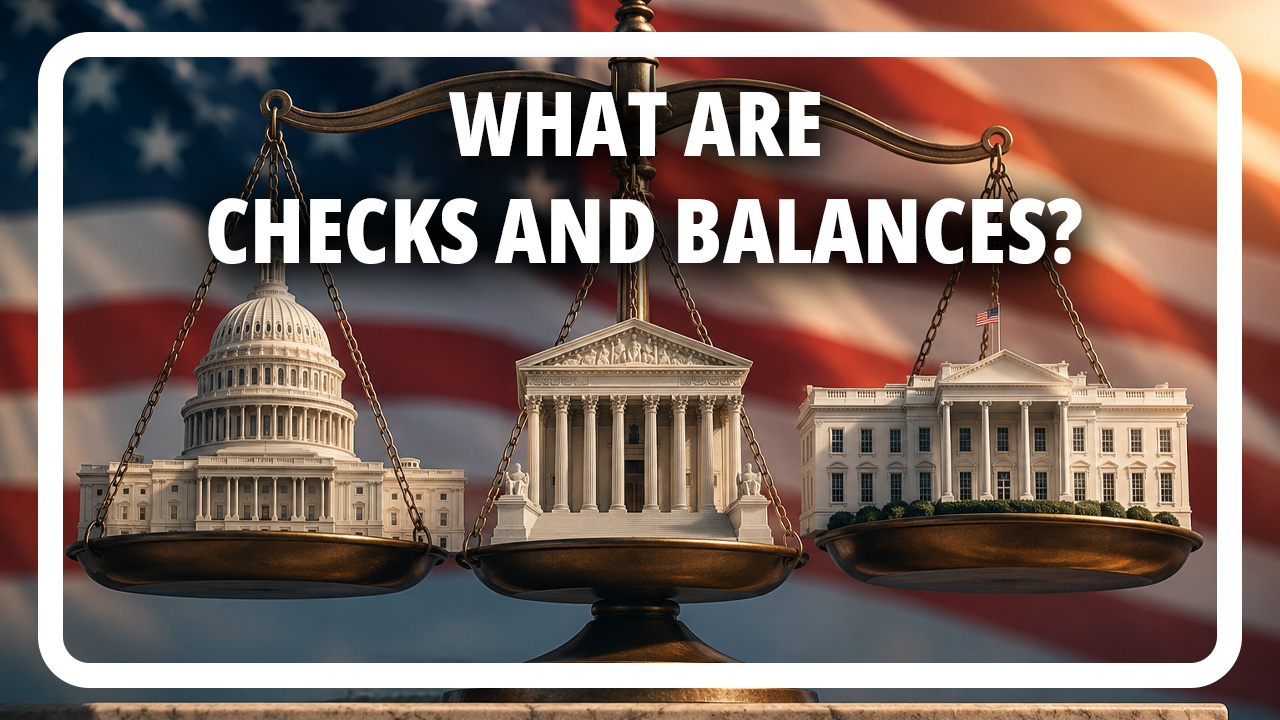
What are checks and balances, and why do they matter? Learn how the legislative, executive, and judicial branches limit one another's power, what happens when those safeguards weaken, and how citizens can help protect American democracy. Featuring insights from experts across The Democracy Group podcast network.
Engaging in civil discourse. Inspiring civic engagement. Exploring the future of our democracy.
Join our community and never miss your favorite episodes from the Democracy Group.
Subscribe to our Newsletter