

Misinformation affects democracy by making it harder for citizens to make informed decisions, participate in elections, and hold political leaders accountable. False or misleading information can distort voters' understanding of candidates and policies, discourage electoral participation, increase political polarization, and undermine trust in democratic institutions. When misinformation becomes widespread, people may struggle to agree on basic facts, making productive debate and compromise more difficult. Because democracy depends on an informed public, the spread of misinformation can weaken the foundations of democratic governance, even when false information is shared without malicious intent.
Democracy depends on citizens having access to accurate information about their government, political candidates, and public policies.
Bruce Schneier, a security technologist and author of Rewiring Democracy, explains that democratic systems work best when citizens understand what's happening around them and can express their preferences based on reliable information.
Misinformation interferes with that process.
Imagine a voter encountering a fabricated story about a political candidate or a misleading claim about a proposed law. If they believe the information, it may influence their political opinions or voting decisions.
The voter may be making a thoughtful decision based on what they believe to be true. Unfortunately, the information informing that decision is inaccurate.
This makes it harder for elections to accurately reflect citizens' informed preferences.
One particularly concerning consequence of misinformation is its potential to interfere with democratic participation.
Mia Hoffman, who studies election-related disinformation, identifies three common objectives behind misleading election narratives: influencing voter opinions, discouraging people from voting, and undermining trust in electoral processes.
For example, false information about polling locations, registration requirements, or voting deadlines could prevent eligible voters from successfully casting their ballots.
Other misleading narratives might falsely claim that voting machines have been manipulated or that certain voting methods are inherently fraudulent.
Even when these claims don't directly change someone's vote, they can weaken confidence in election administration and the legitimacy of election outcomes.
Generative artificial intelligence introduces additional challenges. Simone Leeper, senior legal counsel at the Campaign Legal Center, explains that AI can produce convincing fake audio, images, and videos depicting events that never occurred.
These fabricated materials can make false political claims appear more credible, creating additional challenges for voters trying to determine what is real.
Misinformation can also deepen divisions between political groups.
False or misleading claims often reinforce existing political beliefs, particularly when they portray opposing groups as dangerous, dishonest, or threatening.
Social media recommendation algorithms can amplify these narratives by repeatedly exposing users to similar content.
Angelo Carusone, president of Media Matters for America, describes how engaging with certain political content can lead recommendation systems to suggest increasingly extreme or conspiratorial material.
Over time, this can contribute to people developing very different understandings of political events.
Instead of disagreeing about how to solve a shared problem, citizens may disagree about what happened in the first place.
As Jonathan Rauch, author of The Constitution of Knowledge, explains, propaganda and polarization can reinforce one another. When trust between groups deteriorates, misleading narratives can become more effective at exploiting those divisions.
Another major consequence is the gradual erosion of public trust.
Michael Rich, former president and CEO of the RAND Corporation, describes a phenomenon called truth decay.
It involves the blurring of facts and opinions, the increasing prominence of opinion over factual reporting, declining trust in traditionally respected sources of information, and growing disagreement about objective facts.
These trends can make it harder for citizens to determine which information sources are credible.
When people lose confidence in journalism, scientific research, election administration, or other institutions responsible for providing reliable information, they may become increasingly skeptical of legitimate evidence.
This creates an accountability problem.
Citizens need accurate information to evaluate whether elected officials are fulfilling their responsibilities. If public understanding is dominated by false claims or contradictory narratives, it becomes harder to judge government performance fairly.
Democracy does not require everyone to agree about politics. In fact, disagreement is an essential part of democratic life.
However, productive disagreement requires some shared understanding of reality.
Rauch argues that one of society's most difficult challenges is establishing common standards for determining what is true.
Consider two citizens debating whether a government policy should be expanded. They might disagree about its costs, benefits, or underlying values. Those disagreements can be addressed through evidence, discussion, and democratic compromise.
But if they cannot agree on what the policy actually does, meaningful debate becomes considerably harder.
When citizens operate from fundamentally different sets of facts, political disagreements can become more difficult to resolve.
Fortunately, individuals and institutions can help reduce misinformation's influence.
Rauch emphasizes strengthening truth-seeking institutions, improving individual media habits, and rebuilding civic relationships that create trust between people.
At an individual level, this means checking questionable claims against credible sources, distinguishing facts from opinions, and resisting the temptation to share sensational information before verifying it.
Pauline Hoffman, an infodemiologist and author of Fake News, Witch Hunts, and Conspiracy Theories, offers a simple reminder: "Care before you share."
Ultimately, democracy depends on more than citizens having the freedom to express their opinions. It also depends on their ability to make informed judgments about the world around them.
We don't need to agree on every political issue, but we do need reliable ways to determine what is true. Protecting that shared factual foundation helps citizens participate meaningfully, hold leaders accountable, and work together despite their differences.
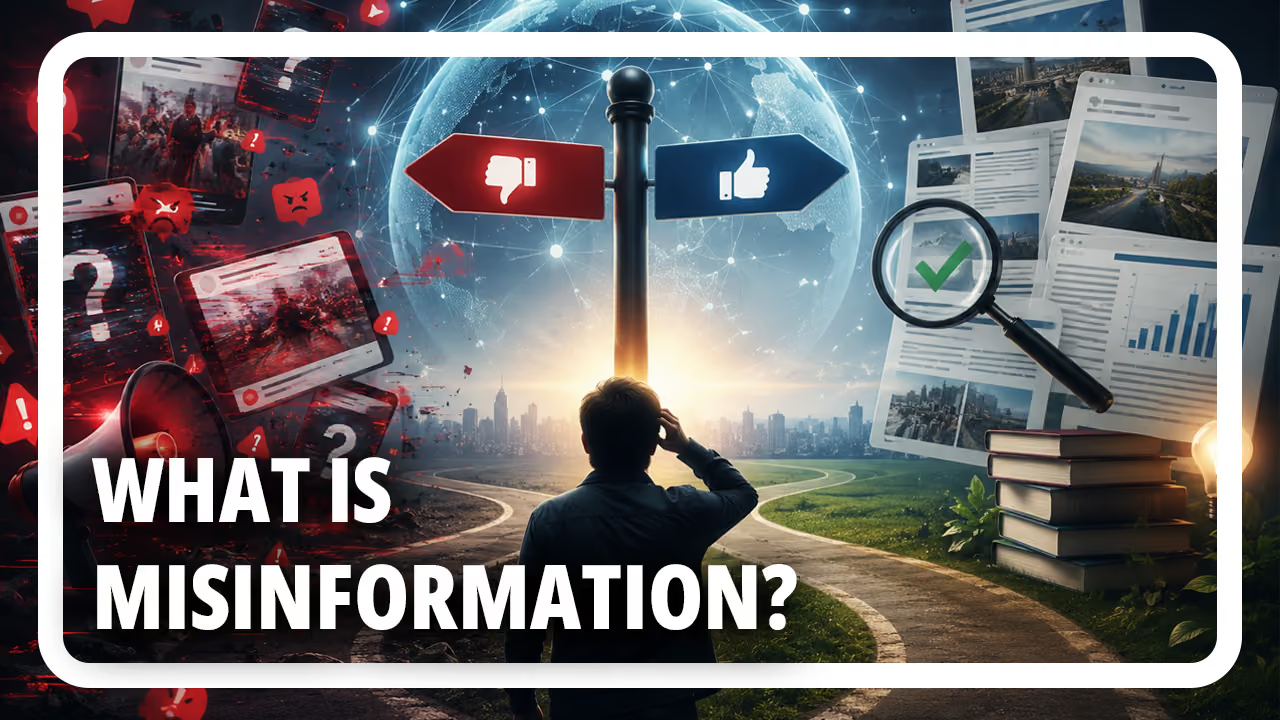
What is misinformation, and how does it spread so quickly online? Learn the difference between misinformation and disinformation, how social media and AI amplify false narratives, and what experts say you can do to protect yourself and strengthen democracy.
Read PostSubscribe to receive a biweekly collection of the hottest podcast episodes from the network, upcoming special events, expert features and news from your favorite shows.
Subscribe to our NewsletterMisinformation is false, inaccurate, or misleading information that is shared without the intention to deceive. It occurs when someone believes something is true and passes it along to others, even though the information is incorrect. Misinformation can take many forms, including false news stories, misleading social media posts, inaccurate statistics, and rumors. Unlike disinformation, which is deliberately created or spread to deceive people, misinformation is generally shared in good faith. However, both can influence public opinion, create confusion, and undermine trust in reliable information.
Misinformation is bad because false or misleading information can cause people to make decisions based on things that aren't true. It can harm public health, influence elections, damage reputations, increase political polarization, and undermine trust in reliable sources of information. Even when misinformation is shared without malicious intent, its consequences can be serious. In a democracy, widespread misinformation is particularly dangerous because citizens need accurate information to evaluate political leaders, debate public policies, and make informed voting decisions. When people cannot agree on basic facts, solving shared problems becomes much more difficult.
Misinformation spreads when people share false or misleading information they mistakenly believe is true. It can travel through social media, news outlets, podcasts, messaging apps, and everyday conversations. Social media algorithms can amplify misinformation by recommending engaging content to more users, while emotionally charged claims and trusted personal relationships can encourage people to share information without verifying it. Artificial intelligence can also accelerate the spread by making convincing fake images, videos, and articles easier to create. Together, these factors allow false information to reach large audiences quickly, sometimes before anyone has checked whether it is accurate.
To combat misinformation, verify information before sharing it, evaluate the credibility of sources, check claims against reliable evidence, and develop strong media literacy skills. Be especially cautious of sensational headlines, emotionally charged messages, and suspicious images or videos. Fact-checking organizations such as PolitiFact, FactCheck.org, and Snopes can help identify false claims. Combating misinformation also requires educating others, correcting falsehoods respectfully, and supporting trustworthy journalism and institutions. While misinformation cannot be eliminated entirely, individuals and organizations can reduce its spread by promoting accurate information and encouraging critical thinking.
The main difference between misinformation and disinformation is intent. Misinformation is false or misleading information shared by someone who believes it is true, while disinformation is false or misleading information deliberately spread to deceive or manipulate others. For example, someone who knowingly creates a fake news story to influence an election is spreading disinformation. However, someone who believes that story and shares it with friends is spreading misinformation. Both can cause harm by misleading the public, influencing decisions, and undermining trust in reliable information, but only disinformation necessarily involves intentional deception.
Brandon Stover is the Network Manager for The Democracy Group and a Digital Content Specialist at the McCourtney Institute for Democracy. He leads partnerships and collaborations across the podcast network, oversees educational content strategy, and produces written, audio, and video content while managing the network's digital marketing efforts. Before joining the McCourtney Institute for Democracy, Brandon founded and led a nonprofit organization dedicated to creating free educational content on global issues. He holds a master's degree in Architecture from Washington State University.
Engaging in civil discourse. Inspiring civic engagement. Exploring the future of our democracy.
Join our community and never miss your favorite episodes from the Democracy Group.
Subscribe to our Newsletter